

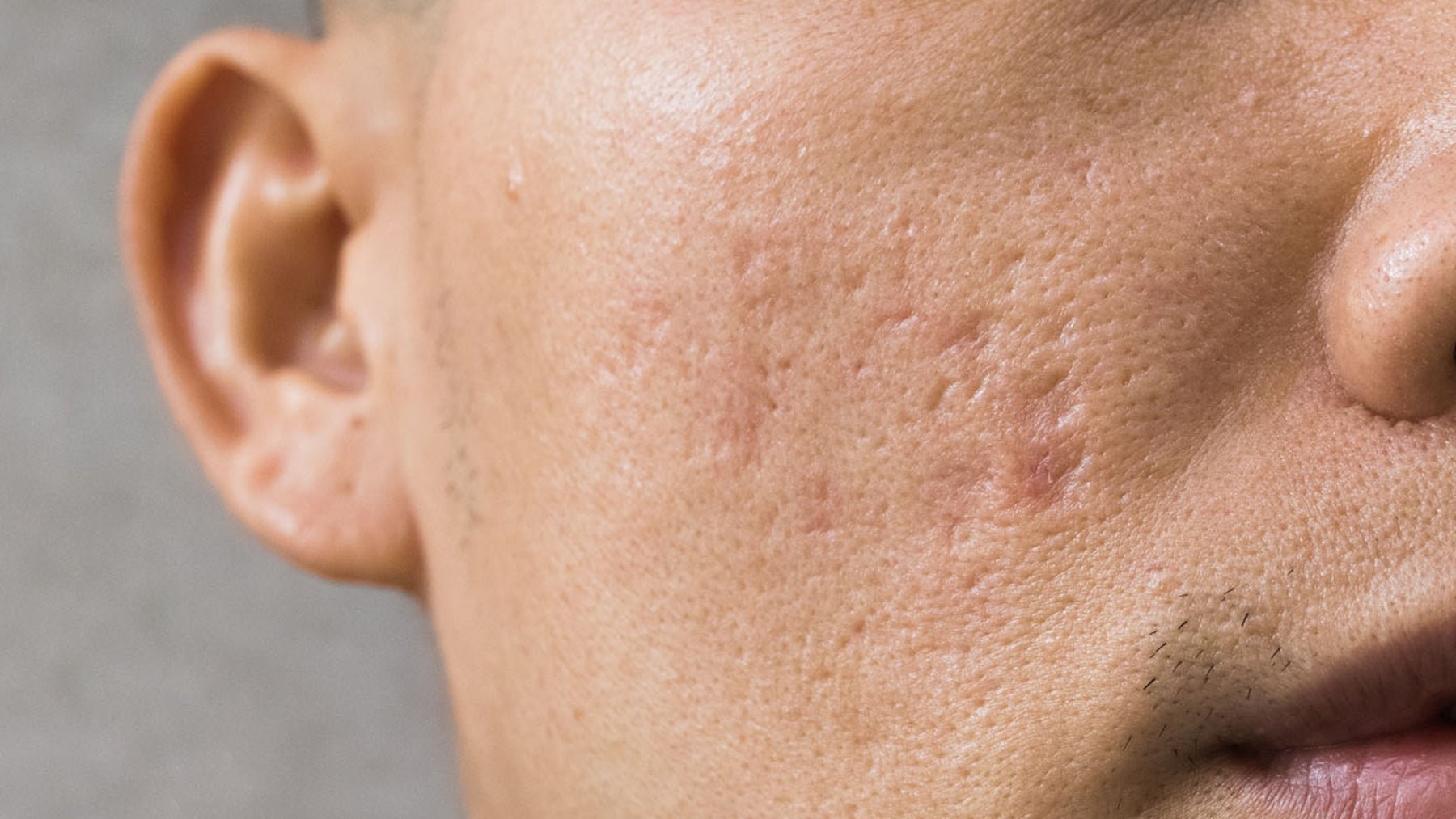
Scars are fibrotic tissues with a structure different from normal skin that emerge during the repair process following skin tissue damage; they can also be defined as wound marks. They generally form after inflammatory processes such as trauma, surgical procedures, burns, or acne (1). Various medical and dermocosmetic solutions are available for scars. The concept of “medical” refers to treatment methods prescribed by health professionals or applied in clinical settings, with scientifically proven efficacy and safety (2). In contrast, the term “dermocosmetic” defines products where pharmaceutical and cosmetic ingredients merge to support skin health and improve aesthetic appearance (3).
In recent years, a notable market growth has been observed globally in the field of scar and wound treatment. In particular, increasing aesthetic awareness, the influence of social media, and the strengthening of personal care culture have accelerated consumer interest in both medical and dermocosmetic solutions (4). Additionally, trends like “clean beauty” and “science-backed skincare” lead consumers toward reliable, clinically tested products with sustainable ingredients (5).
 Scar Types and Their Impact on Treatment
Scars are primarily classified into three types: atrophic, hypertrophic, and keloid. Treatment methods vary depending on these different types (6).
Differences Between Atrophic, Hypertrophic, and Keloid Scars
Atrophic scars usually form after acne or chickenpox and exhibit a sunken appearance due to collagen loss; dermocosmetic approaches and skin-renewing products can be more effective for these types (7). Hypertrophic scars, on the other hand, become prominent with thick fibrotic tissues without exceeding the boundaries of the wound line and generally respond well to silicone-based scar creams or medical laser treatments (8). Keloids are lesions that grow beyond the wound boundaries with aggressive fibroblast activity and frequently require intralesional corticosteroid injections or combined medical scar treatment (9).
Treatment Plan According to Scar Depth and Skin Type
Success in scar treatment depends on creating a personalized plan that considers the depth and spread of the lesion, as well as the individual's skin type (10). While superficial and epidermal-level scars generally respond well to treatment with dermocosmetic scar products, regenerative creams, and topical agents, medical scar treatments such as fractional laser, microneedling, or intralesional injections are preferred for deeper dermal or subdermal scars. The treatment plan should be determined through a multidisciplinary approach, taking into account scar morphology, skin sensitivity, and patient expectations (11).
Medical Treatment Methods
Medical treatment methods are primarily diversified as laser therapy, microneedling, PRP applications, and surgical revision.
Laser Therapy, Microneedling, and PRP Applications
Laser therapy is one of the most effective medical methods used to reduce excessive collagen accumulation in scar tissue and reshape the skin surface. Fractional carbon dioxide (CO₂) and Erbium:YAG lasers stimulate the renewal process in the skin by creating controlled microthermal damage, providing significant improvement, especially in hypertrophic and atrophic scars (12). The microneedling method increases collagen and elastin production by opening minimally invasive microchannels in the epidermis; compared to laser therapy, the healing time is shorter and the risk of side effects is lower. PRP (Platelet-Rich Plasma) applications involve injecting concentrated plasma obtained from the patient's own blood under the skin to activate growth factors, supporting fibroblast activity in scar healing. These three methods show high success rates in reducing the appearance of scars when applied alone or in combined protocols (13).
Surgical Interventions and Post-Operative Care
Surgical interventions are advanced treatment methods applied to deep or wide scar tissues to restore aesthetic appearance and functional movement. Techniques such as excision, Z-plasty, or tissue expansion are used to remove scar tissue and reshape the surrounding skin (9). However, because surgical treatment creates a new wound line, post-operative care is of critical importance; silicone-based dressings, sunscreens, and regular use of scar cream reduce the risk of recurrence and support the healing process (8).
![]() The Importance of Dermatological Supervision
The Importance of Dermatological Supervision
Dermatological supervision in scar treatment is of great importance for accurate diagnosis, appropriate treatment selection, and the prevention of potential complications (2). Products or procedures applied to scars without professional evaluation can lead to undesirable results (6). Regular check-ups ensure that the response to treatment is monitored and, if necessary, medical and dermocosmetic approaches are applied together.
 Scar Care with Dermocosmetic Products
Scar care with dermocosmetic products is an approach that supports the wound healing process, strengthens the skin barrier, and improves aesthetic appearance as a complement to medical treatments.
Scar Creams, Silicone-Based Gels, and Skin-Renewing Serums
Scar creams and silicone-based gels are among the most recommended dermocosmetic agents that regulate collagen synthesis by maintaining moisture balance during the proliferative stage of wound healing (14). The silicone layer reduces transepidermal water loss and balances fibroblast activity in the scar tissue, softening the appearance of the mark. Additionally, skin-renewing serums—especially formulations containing peptides, retinoids, Vitamin C, and hyaluronic acid—accelerate epidermal renewal, reduce pigment irregularities, and increase the scar's harmony with surrounding tissue (15). With regular use, these products provide visible improvement in both aesthetic appearance and tissue quality (4).
Formulas Containing Retinol, Vitamin C, and Peptides
Retinol regulates the irregular collagen distribution in scar tissue by accelerating cell renewal. Vitamin C neutralizes free radicals with its antioxidant effect and reduces color differences around the scar by suppressing melanin synthesis (16). Peptide complexes support the formation of new, smoother connective tissue by increasing fibroblast activation (17). The combination of these active ingredients can significantly improve scar appearance with long-term use.
Importance of Regular Use and Sun Protection
Regular product use and sun protection are two fundamental factors that directly affect treatment success in scar care. Sunlight, especially in the UVB spectrum, can cause hyperpigmentation in the scar area by increasing melanin production (18). Therefore, regular use of sunscreens with SPF 30 or higher supports the effect of dermocosmetic scar products and prevents color inequality (10). Furthermore, it is critical for active ingredients to remain on the skin for a sufficient period to regulate collagen synthesis and sustain structural improvement (11).
 Differences Between Medical and Dermocosmetic Solutions
The fundamental difference between medical and dermocosmetic solutions lies in the depth of intervention, duration of effect, and application method; these two approaches often yield more balanced results when used together (18).
Level of Intervention and Duration of Effect
Medical treatments act on deeper layers of the skin, directly regulating fibroblast activity and can therefore provide lasting results (10). In contrast, dermocosmetic products soften the appearance over time by repairing at the epidermis level; the duration of effect depends on the frequency of regular use (16). Generally, medical interventions give fast results within a few sessions, while dermocosmetic scar products offer supportive care in the long run (8).
Professional Application vs. Home Care
Professional applications offer high efficacy but are more intensive in terms of the healing process and cost. Home care dermocosmetic products, such as silicone-based gels and serums containing retinol and peptides, provide slower but safer progress (15).
Which One to Choose in Which Situation?
The type and depth of the scar, as well as the skin structure, are decisive factors in treatment choice. While dermocosmetic products are usually sufficient for superficial and newly formed marks, medical intervention is required for thick or retractile (contracted) scars (18). Skin color, healing speed, and patient expectations also influence the treatment plan (10). In most cases, dermatologists recommend a combined approach (a protocol starting with medical treatment and sustained with dermocosmetic products) as the most efficient solution (8).
Examples from YA DA Cosmetic Products
YA DA Multicosmetics provides effective care support for scars, as it does for most skin problems, with its scientifically rich products.
Examples of Products with Dermocosmetic Ingredients
From the Remedium series by YA DA Multicosmetics, the purifying cleansing foam, moisturizing and repair-supporting night ointment, skin-renewing body lotion, and SOS care cream (which helps alleviate irritation caused by dryness) are highly effective for scars and scar marks.
Usage Scenarios: New Scars, Old Acne Marks, Surgical Scars
For new scars, the most effective product is the Remedium SOS Repairing Care Cream. Care can be supported by washing with the Remedium Repairing Cleansing Foam. For crusty or cracked scars, Remedium Night Ointment should be preferred. For old acne marks, results can be achieved in a short time by applying Remedium Night Ointment in a thicker layer than normal skin. If there is hyperpigmentation in the mark, additional use of Viniferine Tonic and Cream is appropriate.
Recommendations for Combining Products
The best combination for newly formed scar marks consists of the SOS Repairing Care Cream and the Repairing Cleansing Foam. After some time has passed, Night Ointment can be added to this combination. For darkening problems in marks, products from the Viniferine series can be included in the routine; they will provide a supportive effect during the process.
 Scientific Data and Safety
The reliability of products used in scar treatment should be evaluated not only by their clinical efficacy but also by the scientific data supporting them (19). Today, it has become mandatory to check dermocosmetic products for ingredient safety and prepare supporting documentation before they hit the market (20).
Importance of Dermatological Tests
Dermatological tests are scientific safety evaluations used to determine whether a product causes irritation, sensitivity, or allergies when in contact with the skin (19). These tests are of great importance, especially for products like scar creams and skin-renewing serums, because the skin barrier is weakened in damaged tissue (20).
Ingredient Safety, Allergy Tests, and Evidence of Efficacy
For a dermocosmetic product to be considered reliable, a "clean" ingredient list is not enough; allergy tests and evidence of efficacy must also be provided (18). Clinical studies have shown that most silicone-based formulas and antioxidant-rich serums exhibit high tolerability (20). However, caution is advised for long-term use of products containing potential irritants such as parabens, fragrances, or alcohol.
Label Reading Guide
Reading the label correctly when choosing a scar product is critical for both safety and efficacy (21). Phrases like “Dermatologically tested,” “hypoallergenic,” or “non-comedogenic” indicate that the product meets specific clinical criteria (22). Furthermore, since ingredients listed at the beginning of the list usually make up the bulk of the formula, it gives an idea of the ratio of actives such as niacinamide or Vitamin C.
 Expert Advice and User Recommendations
Success in scar treatment is achieved not only by choosing the right product but also by considering individual skin characteristics. Since every individual's skin type, wound healing speed, and sensitivity differ, personalizing the treatment plan is of great importance. Recommendations from expert dermatologists prevent the use of the wrong products while making the treatment process safe and effective.
Identifying the Solution Suitable for Skin Type
Every skin type reacts differently to treatment; therefore, identifying personal characteristics is the first step in scar care. For oily or acne-prone skin, non-comedogenic formulas that do not clog pores are preferred; for dry and sensitive skin, products that strengthen the moisture barrier are more suitable (18). To find the right products for sensitive skin, be sure to read our guide titled Atopic Skin and the Right Approach. Skin undertone, sebum balance, and sensitivity level directly affect both the duration and effectiveness of the treatment.
Dermatologist Opinion Before Starting Treatment
Getting a professional opinion from a dermatologist before starting scar treatment is critical to avoiding incorrect product selection and potential allergic reactions. The expert determines the appropriate medical or dermocosmetic method based on the type and depth of the scar and the skin structure. This shortens the treatment period and prevents unnecessary product overloading.
The Importance of Patience, Consistency, and Regular Care
Scar treatment is a long-term process; therefore, patience and consistency are essential elements for success. Clinical data shows that the efficacy of silicone-based gels and regenerative serums usually becomes apparent after several weeks (18). Regular application, sun protection, and moisturizing habits support the treatment in yielding lasting results (20).
REFERENCES 1) Gauglitz, G. G., et al. (2011). Hypertrophic scarring and keloids: Pathomechanisms and current and emerging treatment strategies. Molecular Medicine, 17(1–2), 113–125. 2) Lupo, M. P., & Cole, A. L. (2007). Cosmeceutical peptides. Dermatologic Therapy, 20(5), 343–349. 3) Dreno, B., et al. (2019). Safety and efficacy of dermocosmetics in acne management. Journal of the European Academy of Dermatology and Venereology, 33(S6), 34–40. 4) Grand View Research. (2024). Scar treatment market size, share & trends analysis report by product, by application, by end-use, and segment forecasts, 2024–2030. 5) Euromonitor International. (2023). Beauty and personal care: Global industry overview. 6) Atiyeh, B. S., et al. (2005). Hypertrophic scars and keloids: Update and review of the literature. Aesthetic Plastic Surgery, 29(6), 643–652. 7) Jacob, C. I., et al. (2001). Acne scarring: A classification system and review of treatment options. Journal of the American Academy of Dermatology, 45(1), 109–117. 8) Mustoe, T. A., et al. (2002). International clinical recommendations on scar management. Plastic and Reconstructive Surgery, 110(2), 560–571. 9) Ogawa, R. (2017). Keloid and hypertrophic scars are the result of chronic inflammation in the reticular dermis. International Journal of Molecular Sciences, 18(3), 606. 10) Gold, M. H. (2019). Scars: An overview of assessment, classification, and treatment for clinical practice. Dermatology and Therapy, 9(3), 333–346. 11) Manuskiatti, W., & Fitzpatrick, R. E. (2002). Treatment response of keloidal and hypertrophic sternotomy scars: Comparison among intralesional corticosteroid, 585-nm flashlamp-pumped pulsed-dye laser, and combined treatment. Archives of Dermatology, 138(9), 1149–1155. 12) Waibel, J. S., & Beer, K. (2011). Ablative fractional laser resurfacing for the treatment of a traumatic scar. Lasers in Surgery and Medicine, 43(4), 265–269. 13) Aust, M. C., et al. (2010). Percutaneous collagen induction therapy: An alternative treatment for burn scars. Burns, 36(6), 836–843. 14) O’Brien, L., & Pandit, A. (2006). Silicon gel sheeting for preventing and treating hypertrophic and keloid scars. Cochrane Database of Systematic Reviews, (1), CD003826. 15) Zasada, M., et al. (2020). Topical treatments improving skin regeneration. Advances in Dermatology and Allergology, 37(5), 661–667. 16) Nusgens, B. V., et al. (2001). Influence of topical vitamin C on dermal collagen synthesis. Journal of Investigative Dermatology, 116(6), 853–859. 17) Katayama, K., et al. (1993). New class of growth factors for fibroblasts: TGF-β–induced peptides. Journal of Biological Chemistry, 268(24), 18033–18038. 18) Berman, B., & Maderal, A. (2017). Clinical, Cosmetic and Investigational Dermatology, 10, 135–146. 19) Draelos, Z. D. (2019). The science behind skin care: Moisturizers. Journal of Cosmetic Dermatology, 18(4), 1029–1035. 20) Draelos, Z. D. (2019). The science behind skin care: Moisturizers. Journal of Cosmetic Dermatology, 18(4), 1029–1035. 21) Draelos, Z. D. (2019). Consumer interpretation of cosmetic labeling. Journal of Cosmetic Dermatology, 18(4), 1023–1028. 22) Elsner, P., & Maibach, H. I. (2017). Cosmetics and Dermatologic Problems and Solutions. CRC Press.


