

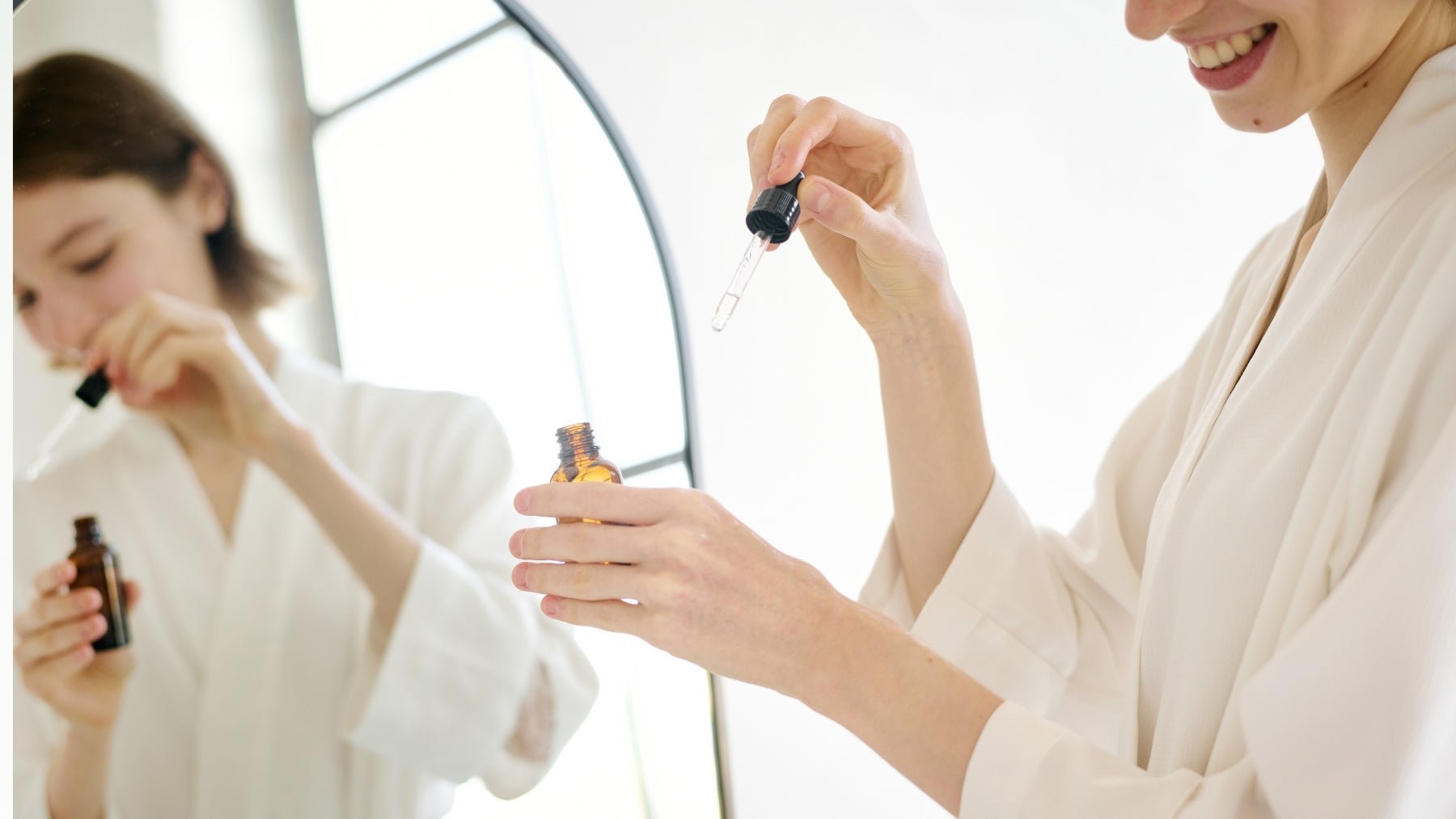
A derivative of Vitamin A (retinoid), Retinol is one of the most effective topical agents in skincare for reducing the signs of photoaging (sun-induced aging) and chronological aging (1). It is a lipophilic molecule that easily penetrates the epidermis. It has the capacity to significantly improve the appearance of wrinkles and fine lines by accelerating the renewal cycle of skin cells and stimulating collagen production in the dermis (2). However, when using powerful active ingredients like Retinol, maintaining the health of the stratum corneum—the outermost layer of the epidermis—is of critical importance (3).
The skin barrier is a fundamental defense mechanism that keeps moisture in by regulating transepidermal water loss (TEWL) and provides protection against environmental factors (3). Side effects such as redness and peeling, commonly seen at the beginning of retinol application, may indicate a temporary disruption of this barrier function (3,4). Therefore, the correct and safe use of retinol is vital for both increasing its effectiveness and protecting the skin barrier. For safe use, steps such as starting with low concentrations, prioritizing nighttime use, supporting with moisturizers, and always using sunscreen should be followed.
 FREQUENTLY ASKED QUESTIONS
There are certain questions that come to everyone's mind regarding the use of retinol. Let's take a look at these questions together.
Which skin concerns is retinol suitable for?
1) Acne vulgaris (adolescent / adult acne) and comedones
Acne vulgaris is a common skin problem that frequently affects adolescents and young adults. Its primary symptoms include the excessive accumulation of skin cells in hair follicles (follicular dyskeratosis), increased sebum (oil) production, and inflammation triggered by the Cutibacterium (formerly Propionibacterium) acnes bacteria living inside the hair follicle (5). Retinoids derived from Vitamin A are considered one of the fundamental treatment options for acne because they directly impact these root causes (5). Retinoids help regulate the main mechanisms involved in the onset of acne, specifically follicular dyskeratosis, which refers to the accumulation of dead cells that clog pores (5). 2) Photo-aging / Signs of natural aging (fine lines, wrinkles, irregular skin texture, pigment irregularities)
There are studies showing that retinol both accelerates the epidermal cell cycle and can increase collagen production in the dermis, thereby reducing wrinkles associated with sun damage (6). In one study, improvement in fine wrinkles was observed after 24 weeks of retinol use (7).
3) Pigmentation (spots), post-inflammatory hyperpigmentation (PIH)
Topical retinoids have been shown to reduce the transfer of melanosomes, which carry pigment to skin cells, thereby helping to improve the appearance of spots. One study reported that formulations containing retinol at concentrations of 0.3% and 0.5% provided significant improvement in dark pigmented areas (8). However, more intense side effects were observed at the 0.5% retinol concentration compared to 0.3% (8). Furthermore, both concentrations yielded similar results after 12 weeks (8). The lower concentration provided better results relative to the high concentration due to tolerability (8).
4) Improving skin texture (smoothness, pore appearance, evening skin tone)
Retinol's support of cell renewal allows the upper layers of the epidermis to shed faster, ultimately contributing to a smoother skin appearance (1).
Is it safe to use retinol on sensitive skin?
The term “sensitive skin” generally refers to skin with a weak barrier and high reactivity (prone to redness, stinging, or burning). Applying active ingredients to such skin types can result in irritation more easily. Retinol can be used safely on sensitive skin, but this safety is not as risk-free as it is for "normal" skin. The risk of irritation can be significantly reduced with the appropriate concentration, slow adaptation, and supportive care (9).
How often should retinol be applied?
While there is no definitive "one size fits all" rule for the frequency of topical retinol use, there are accepted recommendations to maximize effectiveness while minimizing the risk of irritation. According to a review article, topical retinoids should be applied in a thin layer to clean, dry skin at night. In the initial stage, one should start with a lower concentration and low frequency of use; if the skin adapts, daily use can be initiated (10). According to clinical guidelines, use is generally recommended every two or three nights for the first few weeks; if the skin tolerates it well, the frequency is increased (11). However, the frequency of use rule is still not the same for everyone.
 CORRECT USE AND CONCENTRATION
The correct use and concentration of any ingredient applied to the skin are of great importance. Active ingredients like Retinol require even more careful application.
Starting with low concentration
A study published in the Journal of Drugs in Dermatology (2024) stated that 0.1% stabilized retinol provided significant improvement in photo-aging signs, but irritation was mild and temporary (12). Researchers emphasized that this low concentration is the most suitable starting point for both efficacy and tolerance (12).
Starting retinol at a low concentration reduces irritation by protecting the skin barrier, increases long-term tolerance, and ensures that the effectiveness is sustainable. This gradual transition, recommended by dermatology experts, is the safest and most science-based approach to retinol use.
Night routine and application methods
Because retinol can easily degrade with light and oxygen and temporarily makes the skin more sensitive to UV rays, it is recommended to be used only at night (12).
Accordingly, the application plan could be as follows:
- For new users or sensitive skin, start with a low-concentration application one night per week.
- If there are no tolerance issues such as redness, burning, or flaking, increase to 2–3 nights per week.
- If the skin tolerates it completely, you can switch to every-night use. However, for sensitive skin, those prone to irritation, or those applying intense exfoliation/peeling, usage can be maintained every second night or every few nights instead of every night.
- In all cases, it is important not to neglect the use of moisturizer after application and broad-spectrum sunscreen during the day.
SUPPORTIVE CARE TO PROTECT THE SKIN BARRIER
Combination with moisturizing and soothing products
Retinol is a powerful active ingredient that accelerates skin renewal, but due to this property, it can cause temporary dryness, peeling, and sensitivity in the skin barrier. For this reason, it is strictly recommended to be used alongside moisturizing and soothing ingredients. This combination maintains efficacy while increasing skin tolerance. Using moisturizers containing supportive ingredients like ceramides, hyaluronic acid, and niacinamide, or soothing agents (such as Remedium Night Ointment) in the post-retinol routine, allows for safer benefit from the active ingredient by reducing potential side effects.
Use of sunscreen
It is strongly recommended that individuals using retinol use a broad-spectrum sunscreen with at least SPF 30 in their daytime routines. A study published in the Journal of the American Academy of Dermatology showed that regular sunscreen use during retinoid treatment reduces the risk of photo-damage and supports the anti-aging effects of retinol (13). If you are going outdoors the day after using retinol, sunscreen use is essential for sensitized skin care.
 USAGE RECOMMENDATIONS BY AGE AND SKIN TYPE
Sensitive / Atopic Skin
Great care should be taken when using retinol on sensitive or atopic skin types, and retinol should not be preferred if not necessary. These skin types generally have a weakened skin barrier and increased transepidermal water loss (TEWL) (4). According to a review in Dermatologic Therapy (2021), low-concentration (0.1–0.3%) and encapsulated retinol forms should be preferred for these skin types; additionally, it is recommended that the formulation includes barrier-supporting components such as ceramides, panthenol, and niacinamide (4). Applying moisturizer before and after retinol increases tolerance by reducing the risk of irritation.
Normal to Oily, Acne-Prone Skin
With its comedolytic and sebum-balancing properties, retinol is one of the effective topical agents for acne-prone skin. On oily skin, retinol reduces the appearance of pores and smooths skin texture. These skin types are generally more resilient to retinol; however, the frequency of use should be limited to 2–3 times a week for the first 2–3 weeks, after which retinol can become a permanent part of the nightly skincare routine.
Seasonal Needs and Skin Barrier Support
Retinol use should also be adjusted seasonally. In winter months, since low humidity and wind can weaken the skin barrier, richer moisturizers should be preferred. In summer months, the use of SPF 50+ sunscreen is necessary; if needed, the frequency of retinol can be reduced to lower the risk of irritation and photosensitivity (13).
APPROPRIATE CHOICES FROM “YA DA” PRODUCTS
There are many ingredients that can be used before switching to retinol in skincare. Since retinol is a strong active ingredient, it has a high probability of creating sensitivity. Resveratrol, which strengthens the skin barrier and delays aging, can be preferred as a safer alternative. The patented ε-Viniferin in the YA DA Viniferine series is a phenol belonging to the stilbenoid family. It is a resveratrol dimer. It helps reduce the appearance of dark spots and even out skin tone.
Examples of retinol products, usage scenarios, and recommendations
A comprehensive study of products shows that many retinol-containing items are supported by the addition of other ingredients. A published review also found that topical formulations with retinoids utilize improved technologies and delivery systems to reduce irritation (4). Findings show that the following methods can be used to reduce irritation: developing drug delivery systems in the formulation, encapsulating retinoids, converting retinoids into nanoparticles, creating complexes (e.g., with cyclodextrin) and binding retinoids to carriers (e.g., polymers, NLC, SLN), adding anti-irritant components to formulations, and improving the skin barrier and hydration (e.g., combinations of glucosamine, trehalose, ectoin, sucralfate, omega-9, and 4-t-butylcyclohexanol, or adding ethanolic bark extract of Alstonia scholaris R. Br) (4). In summary, choosing products in these forms can provide a more comfortable user experience.
 EXPERT & USER ADVICE
Using retinol is a process that must be started carefully and consciously, as it is an active ingredient with high skin-regenerating power. Since every individual's skin type, tolerance, and age-related needs differ, needs-based selection is important.
Starting with a patch test and small trials
In the initial stage, performing a patch test on a small area such as the inner wrist, behind the ear, or the jawline for 24–48 hours helps prevent potential allergic reactions (14).
Making a needs-based choice
When choosing retinol products, skin type, age, previous use of active ingredients, and specific skin concerns (e.g., acne, wrinkles, spots) should be considered. While lightweight serum formulas are preferred for oily and acne-prone skin, moisturizer-based retinol formulations containing niacinamide or ceramides are recommended for dry or sensitive skin (4,15). Choosing a formula suitable for the skin type increases treatment compliance and success (4,15).
Dermatologist opinion and regular follow-up
Retinol and its derivatives (retinoids) are actives that show individual differences in tolerance as much as they are highly effective. For this reason, it is of great importance to start under the supervision of a dermatologist and to determine the concentration and frequency of use personally. Expert control ensures early detection of unwanted effects such as irritation, skin peeling, or photosensitivity. Regular dermatological follow-up both increases product effectiveness and helps protect the skin barrier.
CONCLUSION
Retinol is a dermatologically accepted active ingredient with effects that support cell renewal, increase collagen synthesis, and improve skin texture. However, this powerful effect provides safe and efficient results only when supported by the correct concentration, regular use, and product selection suitable for the skin type. Proceeding with a low dose initially, combining with moisturizing and soothing ingredients, and not neglecting the use of sunscreen increases the long-term benefits of retinol by reducing its irritation potential. Creating a personalized usage plan under the guidance of a dermatologist, taking into account skin type, age, and individual tolerance differences, is the safest way to gain maximum benefit from both the anti-aging and skin-renewing effects of retinol.
REFERENCES 1) Zasada M, Budzisz E. Retinoids: active molecules influencing skin structure formation in cosmetic and dermatological treatments. Postepy Dermatol Alergol. 2019 Aug;36(4):392-397. doi: 10.5114/ada.2019.87443. 2) Sorg, O., Antille, C., Kaya, G. and Saurat, J.-H. (2006), Retinoids in cosmeceuticals. Dermatologic Therapy, 19: 289-296. https://doi.org/10.1111/j.1529-8019.2006.00086.x 3) Elias, Peter. (2007). Elias PMThe skin barrier as an innate immune element. Sem Immunopath 29:3-14. Seminars in immunopathology. 29. 3-14. 10.1007/s00281-007-0060-9. 4) Narsa AC, Suhandi C, Afidika J, Ghaliya S, Elamin KM, Wathoni N. A Comprehensive Review of the Strategies to Reduce Retinoid-Induced Skin Irritation in Topical Formulation. Dermatol Res Pract. 2024 Aug 17;2024:5551774. doi: 10.1155/2024/5551774. 5) Chien A. Retinoids in Acne Management: Review of Current Understanding, Future Considerations, and Focus on Topical Treatments. J Drugs Dermatol. 2018 Dec 1;17(12):s51-55. 6) Mukherjee S, Date A, Patravale V, Korting HC, Roeder A, Weindl G. Retinoids in the treatment of skin aging: an overview of clinical efficacy and safety. Clin Interv Aging. 2006;1(4):327-48. doi: 10.2147/ciia.2006.1.4.327. 7) Kafi R, Kwak HSR, Schumacher WE, et al. Improvement of Naturally Aged Skin With Vitamin A (Retinol). Arch Dermatol. 2007;143(5):606–612. doi:10.1001/archderm.143.5.606 8) Zasada M, Budzisz E, Erkiert-Polguj A. A Clinical Anti-Ageing Comparative Study of 0.3 and 0.5% Retinol Serums: A Clinically Controlled Trial. Skin Pharmacol Physiol. 2020;33(2):102-116. doi: 10.1159/000508168. 9) Kim BH. Safety Evaluation and Anti-wrinkle Effects of Retinoids on Skin. Toxicol Res. 2010 Mar;26(1):61-6. doi: 10.5487/TR.2010.26.1.061. 10) Chng WQ, Samuel M, Naidoo K, Jaffar H, Khor IW, Yiong Huak C, Watson REB, De Mozzi P, Tam WWS, Camargo CP, Leong WMS. Topical treatments and skin‐resurfacing techniques for skin ageing. Cochrane Database Syst Rev. 2021 Aug 19;2021(8):CD014391. doi: 10.1002/14651858.CD014391. 11) https://britishcosmderm.com/resource/topical-retinoids 12) Farris P, Berson D, Bhatia N, Goldberg D, Lain E, Mariwalla K, Zeichner J, Miller D, McGuire T, Kizoulis M. Efficacy and Tolerability of Topical 0.1% Stabilized Bioactive Retinol for Photoaging: A Vehicle-Controlled Integrated Analysis. J Drugs Dermatol. 2024 Apr 1;23(4):209-215. doi: 10.36849/JDD.8124. 13) Skin benefits of a retinol-containing daily moisturizer with photostable SPF-30 Journal of the American Academy of Dermatology, Volume 58, Issue 2, AB23 14) Leyden, James & Grove, Gary & Zerweck, Charles. (2004). Facial tolerability of topical retinoid therapy. Journal of drugs in dermatology : JDD. 3. 641-51. 15) Milosheska D, Roškar R. Use of Retinoids in Topical Antiaging Treatments: A Focused Review of Clinical Evidence for Conventional and Nanoformulations. Adv Ther. 2022 Dec;39(12):5351-5375. doi: 10.1007/s12325-022-02319-7.


