

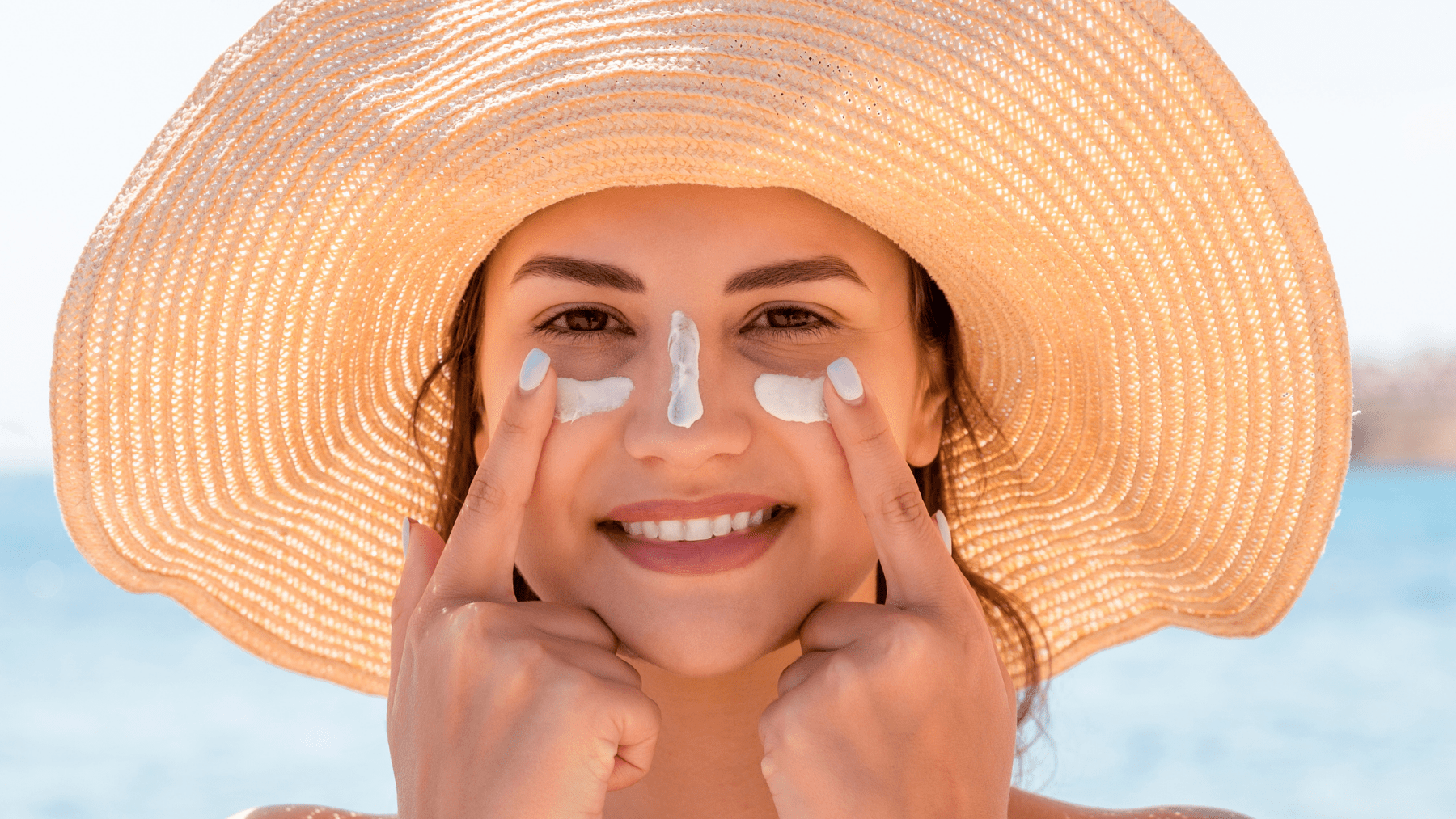
The concept of SPF has become increasingly important in our lives with the increasing popularity of sunscreens. What do the different SPF numbers on sunscreens mean? Should we buy the sunscreen with the highest SPF? What else should we consider when choosing sunscreen? This article answers these questions. It also serves as an informative and comprehensive guide to choosing sunscreen.
What is SPF (Sun Protection Factor) and How Does It Protect Our Skin?
SPF is short for Sun Protection Factor. SPF is a measure of a sunscreen's ability to protect against the sun. This factor is calculated by dividing the UV energy required to produce the minimum erythema dose (MED) on sunscreen-applied skin by the UV energy required to produce the MED on unprotected skin. MED is the minimum amount of UV radiation that will produce erythema (a sunburn or reddening caused by blocked capillaries) on an individual's skin within a few hours of exposure. More simply, it describes how much later it takes for sunscreen-applied skin to develop redness compared to unapplied skin[1][2].
Sunscreens prevent UV rays from damaging the skin through two different mechanisms. The first is to create a physical barrier; these products are often called "mineral sunscreens" because they contain minerals like titanium dioxide or zinc oxide. These minerals protect the skin by reflecting UV rays like a mirror. The other method is through chemical filters. Chemical sunscreens absorb UV rays before they reach the skin, forming a thin film on the skin surface[3].
 What Do SPF Values (15, 30, 50+) Mean? Which One Should You Choose?
The SPF value indicates how much UV rays a sunscreen can filter. As SPF values increase, the UV dose reaching the skin decreases accordingly. There are some misconceptions about SPF values. One of these is that SPF 50+ is not twice as effective as SPF 30. This is because SPF 30 sunscreens absorb 96.7% of UV rays, while SPF 50+ sunscreens absorb 98.3%. Considering these ratios, there doesn't seem to be much difference between them. In terms of the amount of UV reaching the skin, someone using SPF 30 is exposed to approximately twice as much UV rays as someone using SPF 50+.
To make these numbers more meaningful, an example can be given: When applying an SPF 30 sunscreen, sunburn occurs approximately twice as late as when using an SPF 15 product. These times, of course, vary from person to person [4].
Additionally, certain factors should be considered when choosing sunscreen. If you're going to be in contact with water, you should choose a water-resistant sunscreen. Alternatively, if you're spending extended periods outdoors and are in frequent sun exposure, using SPF 50+ would be more beneficial. When choosing sunscreen, it's essential to consider your skin type. For those with sensitive skin, it's recommended to choose SPF 50+ sunscreen products, even for short-term sun exposure[5].
UVA, UVB, and Broad Spectrum Protection: Why It's Important for Your Skin Health
The harmful effects of sunlight are mostly caused by the ultraviolet (UV) region of the electromagnetic spectrum. UV rays are divided into three groups based on their wavelengths: UVA rays in the 320-400 nm range, UVB rays between 290-320 nm, and UVC rays with wavelengths between 200-290 nm. Not all UV rays from the sun reach the Earth. UVC is blocked by the atmosphere, while UVA and UVB can reach the Earth. Some UVB is filtered by the ozone layer. Although the unfiltered portion cannot penetrate the lower layers of the skin, it damages the epidermis and the surface of the dermis. UVB is also responsible for sunburn and redness. UVA, on the other hand, can reach the deeper layers of the dermis and is more damaging to the skin[1][6].
UV radiation is a mutagenic agent. Therefore, long-term exposure to sunlight has been shown to be associated with the development of skin cancer and erythema [6]. This damage is caused by both UVA and UVB. Choosing broad-spectrum sunscreens that provide both UVA and UVB protection provides more comprehensive protection.
Additionally, multicosmetic products such as moisturizers, creams, lotions, and foams containing sunscreen ingredients are now available. Regular use of these products can help reduce the harmful effects of ultraviolet radiation[1].
What are the Vital Benefits of Using Sunscreen for Skin Health?
Our skin is exposed to various environmental factors throughout the day, including solar radiation. These factors can lead to sunburn, dyschromia, premature aging, and skin cancer. Certain precautions can be taken to protect against these negative effects, such as staying in the shade, wearing protective clothing, or sunglasses. [7]
One of the most effective ways to reduce the harmful effects of the sun is to use sunscreen. Broad-spectrum sunscreens (protecting against both UVB and UVA rays) provide greater protection. The primary purpose of sunscreen is to protect the skin from UV rays, but it also needs to be safe for the skin. They should not cause allergies or sensitivities. Therefore, it's important that the sunscreen you use is a skin-friendly skincare product .
 The Most Effective Shield Against Sunburns, Skin Blemishes and Premature Aging
Spending time in the sun has positive emotional and physical effects. However, during this time, we are also exposed to UV rays. In the long term, these rays cause biological effects such as premature aging, suppression of the immune system, carcinomas (a type of cancer in the skin or organ tissue), and melanoma (uneven skin color).[1][7].
UV rays damage DNA when they reach deep into the dermis. This causes photoaging, which manifests as wrinkles and sagging skin. Photoprotective agents in sunscreens increase resistance to UV and minimize potential damage. With this effect, sunscreens can prevent premature aging caused by harmful sun rays[8].
To protect yourself from the sun's general harmful effects, it's important to avoid excessive UV exposure. This can be achieved by staying in the shade, wearing sunglasses, and applying sunscreen. This will help prevent sunburns and spots. Sunscreen is even more crucial during the summer months, when we're exposed to more sunlight. Avoiding exposure to the sun, especially between 11:00 AM and 4:00 PM, when the sun's rays are most intense and damaging, is crucial for maintaining skin health.
The Role of Sunscreen in Reducing Skin Cancer Risk
According to data from the World Health Organization, skin cancer was the most commonly diagnosed cancer in 2022. UV radiation is one of the most important factors in the development of skin cancer. UVA and UVB rays that reach the skin are responsible for cancer development. These rays damage cells and induce cancer by damaging DNA [9][10]. Sunscreen protects against skin cancer by blocking UV rays from reaching the skin. This was confirmed in a study conducted on mice. In mice treated with sunscreen, the risk of developing the p53 mutation, which is associated with cancer, was almost completely eliminated. Therefore, sunscreen use is an important component of skin cancer prevention [11].
Proper sunscreen use is also important for skin cancer prevention. The Skin Cancer Federation (SCAN) recommends applying sunscreen as follows: Regardless of the SPF, sunscreen should be applied 30 minutes before going outside and reapplied every two hours. It should be reapplied immediately after swimming or contact with water. The recommended amount of sunscreen is 28 grams, or approximately two tablespoons[5].
As a result, UVA and UVB rays from the sun can reach the lower layers of the dermis and cause redness, blemishes, and skin cancer. Sunscreens largely block these UV rays from reaching the skin. Furthermore, sunscreens that provide both UVA and UVB protection provide more comprehensive protection. Another factor to consider when choosing a sunscreen is its SPF value. A higher SPF value provides longer-lasting protection. For sensitive skin and those who will spend a lot of time in the sun, SPF 50+ sunscreens are recommended[1][4].
Source
[1] Dutra, Elizângela & Oliveira, Daniella & Kedor-Hackmann, Erika & Santoro, Maria. (2004). Determination of sun protection factor (SPF) of sunscreens by ultraviolet spectrophotometry. Revista Brasileira De Ciencia Do Solo - REV BRAS CIENC SOLO. 40. 10.1590/S1516-93322004000300014.
[2] Heckman CJ, Chandler R, Kloss JD, Benson A, Rooney D, Munshi T, Darlow SD, Perlis C, Manne SL, Oslin DW. Minimal Erythema Dose (MED) testing. J Vis Exp. 2013 May 28;(75):e50175. doi: 10.3791/50175. PMID: 23748556; PMCID: PMC3734971.
[3] MD Anderson Cancer Center. (n.d.). How does sunscreen work? Understanding UV protection. https://www.mdanderson.org/cancerwise/how-does-sunscreen-work.h00-159698334.html
[Accessed: May 21, 2025]
[4] Osterwalder, U., & Herzog, B. (2009). Sun protection factors: world wide confusion. The British journal of dermatology, 161 Suppl 3, 13–24. https://doi.org/10.1111/j.1365-2133.2009.09506.x
[5] “Ask the Expert: Does a High SPF Protect My Skin Better?” The Skin Cancer Foundation, [Accessed: 21 May 2025]
[6] Yang, J. W., Fan, G. B., Tan, F., Kong, H. M., Liu, Q., Zou, Y., & Tan, Y. M. (2023). The role and safety of UVA and UVB in UV-induced skin erythema. Frontiers in medicine, 10, 1163697. https://doi.org/10.3389/fmed.2023.1163697
[7] Flavia Alvim Sant'anna Addor, Carlos Baptista Barcaui, Elimar Elias Gomes, Omar Lupi, Carolina Reato Marçon, Hélio Amante Miot, Sunscreen lotions in the dermatological prescription: review of concepts and controversies, Anais Brasileiros de Dermatologia,
Volume 97, Issue 2,(2022) ,Pages 204-222,
[8] Latha, MS, Martis, J., Shobha, V., Sham Shinde, R., Bangera, S., Krishnankutty, B., Bellary, S., Varughese, S., Rao, P., & Naveen Kumar, BR (2013). Sunscreening agents: a review. The Journal of clinical and aesthetic dermatology, 6(1), 16–26.
[9] International Agency for Research on Cancer. (n.d.). skin cancer World Health Organisation. Retrieved May 22, 2025, from https://www.iarc.who.int/cancer-type/skin-cancer/
[10] Hasan, N., Nadaf, A., Imran, M., Jiba, U., Sheikh, A., Almalki, WH, Almujri, SS, Mohammed, YH, Kesharwani, P., & Ahmad, F. J. (2023). Skin cancer: understanding the journey of transformation from conventional to advanced treatment approaches. Molecular cancer, 22(1), 168. https://doi.org/10.1186/s12943-023-01854-3
[11] Lee, J. W., Ratnakumar, K., Hung, K. F., Rokunohe, D., & Kawasumi, M. (2020). Deciphering UV-induced DNA Damage Responses to Prevent and Treat Skin Cancer. Photochemistry and photobiology, 96(3), 478–499. https://doi.org/10.1111/php.13245


